You're Not Wrong.
You're Missing the Words.
A practical vocabulary guide for thoughtful Americans who can see that something has changed — in the culture, the family, the church, and the country — but struggle to explain it clearly without sounding angry, academic, or defensive.
Digital PDF. Instant access. Read it as a reference guide — not as homework.

You Know More Than You Can Say.
You try to explain something obvious — that character still matters, that a family is not arbitrary, that a country can be loved, that some things are simply wrong — and the words come out smaller than the conviction behind them.
You can sense the pattern. You can see the contradiction. You know something has shifted. But when you try to say it, it sounds too simple.
That does not mean you are wrong. It means you were never handed the vocabulary.
That sounded like a bumper sticker. That’s not what I mean. I know more than that.
This reference exists to end that.
What You Cannot Name, You Cannot Defend.
Without language, you will keep losing conversations you are actually right about. Not because your convictions are wrong — because the argument is over before you find the word.
- §You avoid hard conversations with children and grandchildren.
- §You let other people define the terms.
- §You feel angrier because nothing has a name.
- §You mistake confusion for weakness.
- §You keep reacting instead of understanding.
- §You cannot transmit what you cannot articulate.
Clarity begins with naming.
You Don’t Need Louder Opinions.
You Need Older, Stronger Words.
The current argument did not begin yesterday. Many of the concepts shaping the modern world already have names, histories, patterns, and consequences. Once you learn those names, the news stops feeling like random chaos and starts becoming readable.
This is not ammunition.
It is a map.
The words were not invented for today’s fight. Many predate it by centuries. They are tools for understanding, not insults for winning.
The Term. The Record. The Sentence.
Every entry in the guide is built the same way — so you can move from confusion to clarity to conversation in a single page.
The Term
A plain-English definition of the concept. No jargon. No detours.
The Record
Where it comes from, why it matters, and what history has already shown.
Say It Out Loud
A simple sentence you can use with a neighbor, family member, or grandchild.
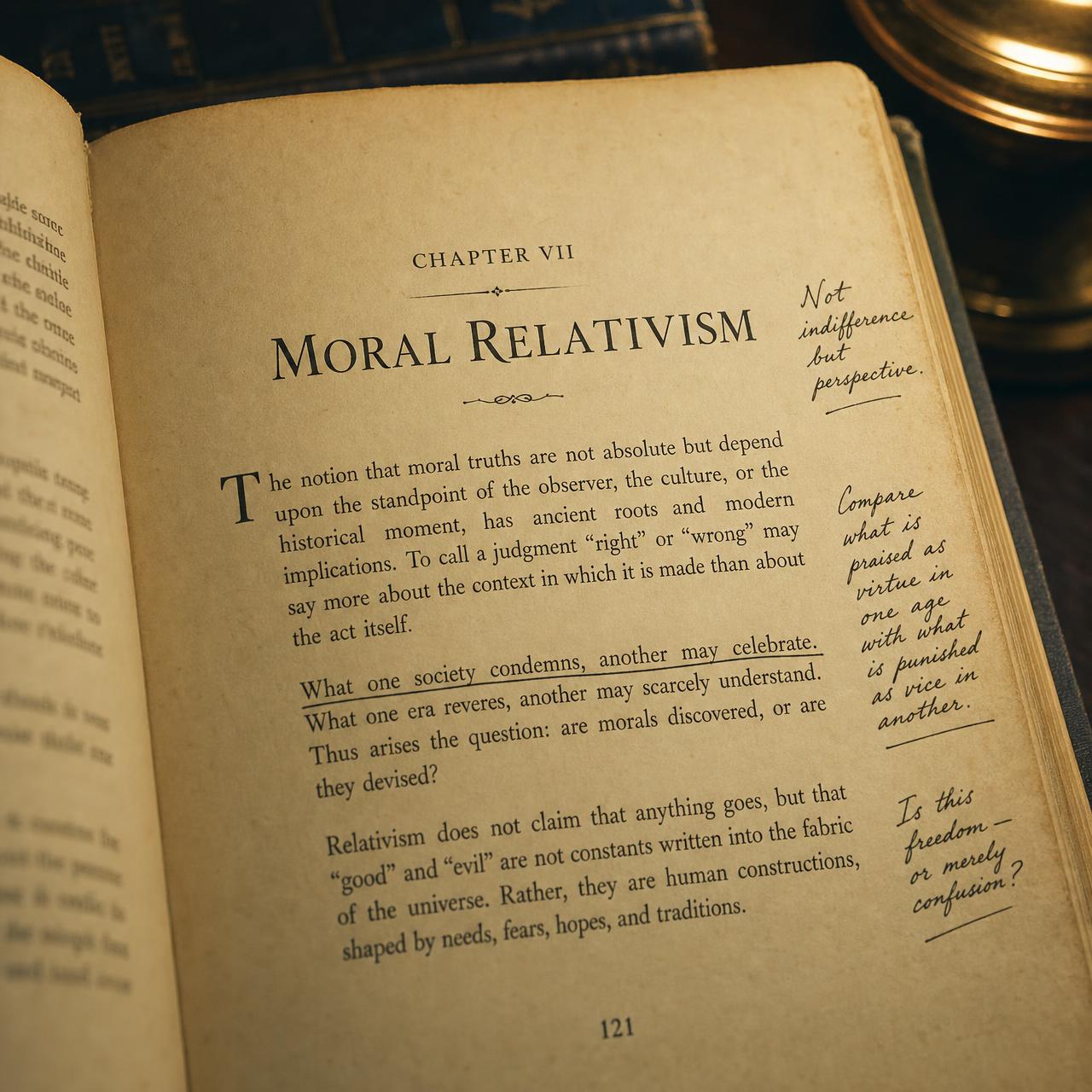
Moral Relativism
The belief that right and wrong are not fixed truths, but depend on culture, era, or preference.
“If nothing is really right or wrong, then whoever ends up with the most power gets to decide.”
The Civilizational Vocabulary.
A 40-word reference guide for people who can see the pattern — but need the language to explain it.
A digital reference guide that gives you 40 essential words for understanding the moral, cultural, institutional, and civilizational patterns shaping modern America. Designed to be used — not merely read.
Open it when:
- A conversation with your child or grandchild leaves you searching for words.
- A news story feels wrong but hard to explain.
- A church or institution adopts language that sounds moral but feels hollow.
- Someone tells you your values are outdated.
- You need a calmer way to say what you believe.
What Changes When You Finally Have the Words?
You stop sounding defensive.
You explain instead of react.
You recognize the pattern faster.
The news becomes readable when the mechanism has a name.
You speak with more calm.
Clarity lowers the emotional pressure of every conversation.
You defend values without slogans.
You move from “common sense” to historically grounded language.
You talk to younger people with precision.
Not to dominate — to transmit something real.
You recover intellectual confidence.
Your instincts were not empty. They were unnamed.
Inside The Civilizational Vocabulary
40 essential concepts, each with a plain-English definition, historical context, and a “Say It Out Loud” sentence for real conversation. Organized into four working sections.
I. Foundation
The moral bedrock most of us assume — and rarely name.
- §Moral Relativism
- §Moral Absolutes
- §Ordered Liberty
- §Inherited Wisdom
- §The Sacred
- … and more inside.
II. Mechanism
How ideas are moved, hidden, and enforced through language and institutions.
- §Secular Religion
- §Censorship by Omission
- §Language Capture
- §Institutional Capture
- §The Ratchet Effect
- … and more inside.
III. People & Ideas
How character, credentials, and consequences fit together.
- §Character and Idea Are Inseparable
- §The Moralizing Hypocrite
- §Theory Over People
- §Credentialed Authority
- §Follow the Fruits
- … and more inside.
IV. What Is Being Dismantled
Family, tradition, merit, sacredness, institutions, and civilizational memory.
- §The Family as Institution
- §Merit
- §Civilizational Memory
- §Tradition as Compression
- §The Commons
- … and more inside.
You do not need to read it front to back. Open it, find the word, use the sentence.
The Same Thought, Finally Named.
Four honest examples of what changes when the vocabulary is there.
“I just feel like they keep changing the meaning of words.”
This is language capture — controlling the words so the argument is won before it begins.
“It feels like the experts all agree against people like me.”
This is institutional capture — when the institutions that define expertise inherit old prestige and spend it on new ideology.
“I don't think freedom means doing whatever you want.”
That's ordered liberty — freedom that depends on law, virtue, and self-restraint.
“Nothing feels sacred anymore.”
When a culture loses the sacred, it loses the ability to say, ‘this, we do not touch.’
Built for Precision, Not Exaggeration.
- ✓No fabricated statistics.
- ✓No vague “experts say” claims.
- ✓Concepts grounded in historical and moral vocabulary.
- ✓Interpretations flagged as interpretations.
- ✓Designed to help you avoid overreach — not commit it.
The fastest way to lose a true argument is to exaggerate it. This guide was written to protect the reader from that mistake as much as from confusion.
This Is Not What You’re Tired Of.
This guide is not designed to make you angrier. It is designed to make you clearer.
You don't need to be. Every entry ends with plain English you can actually say.
It's a reference guide. Use one word at a time.
No. The point isn't to insult people. The point is to name patterns accurately.
Yes. Every ‘Say It Out Loud’ line was written for real conversations, not theory.
It's serious, but written plainly. The goal is clarity, not complexity.
Get The Civilizational Vocabulary Today.
The full digital ebook — 40 essential concepts.
- 40 civilizational, moral, and cultural concepts
- Historical explanation for each concept
- Plain-English “Say It Out Loud” sentences
- Organized as a practical reference — not homework
- Instant digital access after checkout (PDF)
- Readable on phone, tablet, or printed at home
Read one word today. Use it this week.
Start with the first eight terms. You’ll know within minutes whether this gives you the words you’ve been missing.
Questions Readers Ask.
Stop Reaching for the Words.
Have Them.
You have seen the pattern for years. You have felt the frustration of trying to explain it. You don’t need louder opinions. You need clearer language.
40 words · Historical grounding · Plain-English sentences you can actually use.